
Still drowning in repetitive manual tasks? You are not alone. Studies show that 90% of teams lose hours every week to work that software can automate. The good news? A new generation of AI-powered SaaS productivity tools is changing all of that — fast.
Whether you are a startup founder, a remote team lead, or a seasoned professional, this guide shows you exactly how SaaS management platforms can save time, cut costs, and drive real results.
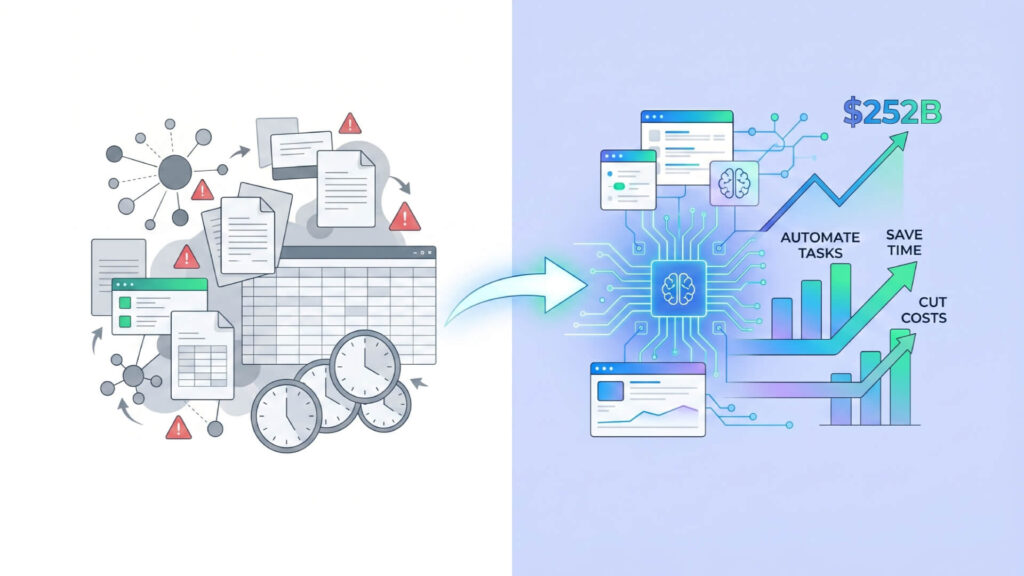
Key Stat: Transitioning to SaaS solutions could deliver up to $252 billion in direct economic benefits over the next 10 years. This is not just hype; it is already happening.
1. Why Traditional Tools Are Holding You Back
Let us be honest. Spreadsheets and manual workflows had their day. But today, they create more problems than they solve. Here is what businesses still using legacy systems face every day:
Data silos that block cross-team collaboration
High human error rates from copy-paste workflows
Zero predictive capability for project outcomes
Slow onboarding that kills momentum
⚠️ The problem is not that your team does not work hard. The problem is that outdated tools are working against you.
2. The Rise of SaaS Management Platforms
SaaS management platforms have moved far beyond simple cloud storage. Today, the best platforms combine artificial intelligence, business workflow automation, and deep analytics into a single platform.
According to Grand View Research, the global software-as-a-service market is projected to reach $819.23 billion by 2030, with a compound annual growth rate of 12% from 2025 to 2030. The results speak for themselves:
GDP growth boost of 1.3% projected by 2030 from widespread SaaS adoption
7,500 new jobs created annually thanks to SaaS-driven operational scaling
Users get up to speed in under 1 hour — no IT department needed
3. Five Features That Actually Move the Needle
① AI Predictive Analytics
Modern SaaS tools use AI predictive analytics to forecast outcomes before you commit resources. Platforms like BidNexus analyze historical data, calculate win probabilities, and surface actionable insights — automatically. Stop guessing. Start predicting.
② Automated Proposal Generation
Generating proposals used to take days. With NLP-powered engines, today’s SaaS platforms read complex requirements and produce polished, competitive documents in minutes.
⏱ Teams using automated proposal generation report saving up to 80% of the time previously spent on manual drafting.
③ Business Workflow Automation
Business workflow automation is the engine under the hood. It keeps data flowing between teams, triggers actions based on events, and eliminates the repetitive administrative work that drains productivity. Think: auto-updated records, seamless Microsoft Excel integration, and self-service data entry by candidates or clients.
④ Employee Engagement SaaS & Workforce Management
Great companies do not just track output — they protect their people. Leading workforce management solutions surface real-time workload data without invasive micro-monitoring. Managers spot burnout risks early. Teams feel trusted and engaged. Retention improves.
⑤ Cloud Deployment and Data Compliance
Security concerns are the number-one barrier to SaaS adoption. The best platforms address this head-on:
Cloud-native architecture — no installation required
Industry-leading encryption at rest and in transit
Built-in GDPR compliance, cloud deployment and data compliance standards
Accessible from any browser, on any device
4. SaaS vs. Traditional Tools: The Honest Comparison
Actions speak louder than buzzwords. Here is how the two approaches stack up:
| Factor | Traditional Tools | SaaS + AI Solutions |
| Time Cost | ❌ High | ✅ Low |
| Success Rate | ❌ Unpredictable | ✅ Predictable |
| Labor Cost | ❌ High | ✅ Automated |
| Scalability | ❌ Limited | ✅ High |
| Compliance | ❌ Manual | ✅ Built-in |
5. Real-World Use Cases
Theory is great. Real results are better. Here is who benefits most:
Enterprise & Bidding Teams: Bid management software replaces error-prone manual processes with AI-powered pipelines. Teams submit stronger proposals, faster — and win more business.
Startups & Small Teams: Startups can not afford wasted time. SaaS integration connects your entire stack on day one, letting small teams operate like large ones without the overhead.
Remote & Distributed Teams: Remote teams thrive on SaaS management platforms. Shared dashboards, automated updates, and cloud access keep everyone aligned — regardless of time zone.
6. Frequently Asked Questions (FAQ)
What are SaaS productivity tools?
SaaS productivity tools are cloud-based software applications that help individuals and teams automate tasks, collaborate in real time, and manage workflows — accessible from any device with no installation required.
How do SaaS management platforms improve employee engagement?
Employee engagement SaaS platforms provide transparent workload visibility, reduce administrative friction, and help managers identify burnout risks early — creating a healthier, more motivated workforce. According to the OECD, employers in manufacturing have reported that adopting AI has improved health and safety, resulting in a healthier, more motivated workforce.
Is SaaS integration secure for sensitive business data?
Yes. Leading SaaS platforms offer enterprise-grade encryption, role-based access controls, and full cloud deployment, with data compliance with regulations such as GDPR, SOC 2, and ISO 27001.
How quickly can a team adopt a new SaaS platform?
Most modern SaaS productivity tools are designed for rapid onboarding. The average user can master core features in under one hour, with no IT support needed. Furthermore, according to Max Beech, users who begin using SaaS tools within the first 48 hours are much more likely to stay engaged with the product, resulting in nearly 4 times higher retention rates.
What is the ROI of switching to SaaS?
Research shows SaaS adoption can deliver up to $252 billion in economic impact over 10 years. At the team level, benefits include reduced labor costs, higher win rates, and dramatically improved output per person.
Can SaaS tools replace bid management software?
Many modern SaaS platforms include purpose-built bid management software that combines AI predictive analytics, automated proposal generation, and compliance tracking in a single, unified system.